DairyNZ publishes a free Biosecurity Farm Plan template (DairyNZ). It works in three steps: look at your farm map, assess the risk pathways, and put a plan in place to manage the risks. Its sections cover animals, feed, the farm environment, visitors and emergency management.
Property details
Who owns and runs the farm, what it produces, the date, and who wrote the plan. Beef + Lamb New Zealand's template opens the same way, with the farm name, the date and who completed it (Beef + Lamb NZ).
A map with your entry points and zones
Mark the boundary, every gate and track in, where visitors park, and where boots and vehicles get cleaned. DairyNZ's visitor plan uses red, orange and green zones to show where visitors can and cannot go (DairyNZ).
What arrives and what leaves
List everything that comes onto the farm and everything that goes off it: stock, feed, vehicles, gear, people, effluent and water. Against each line, note how it could carry a pest, weed or disease. DairyNZ's template asks you to consider the disease status of new stock before buying or moving animals.
The risks, and what you do about each one
Rate each line by how often it happens on your farm and what it would cost if something came in that way. For the ones at the top, write down what you do. OSPRI's examples include running a closed herd, buying from known and trusted suppliers, fencing that stops nose to nose contact with neighbouring cattle, and having one clear entry point (OSPRI).
Visitors and contractors
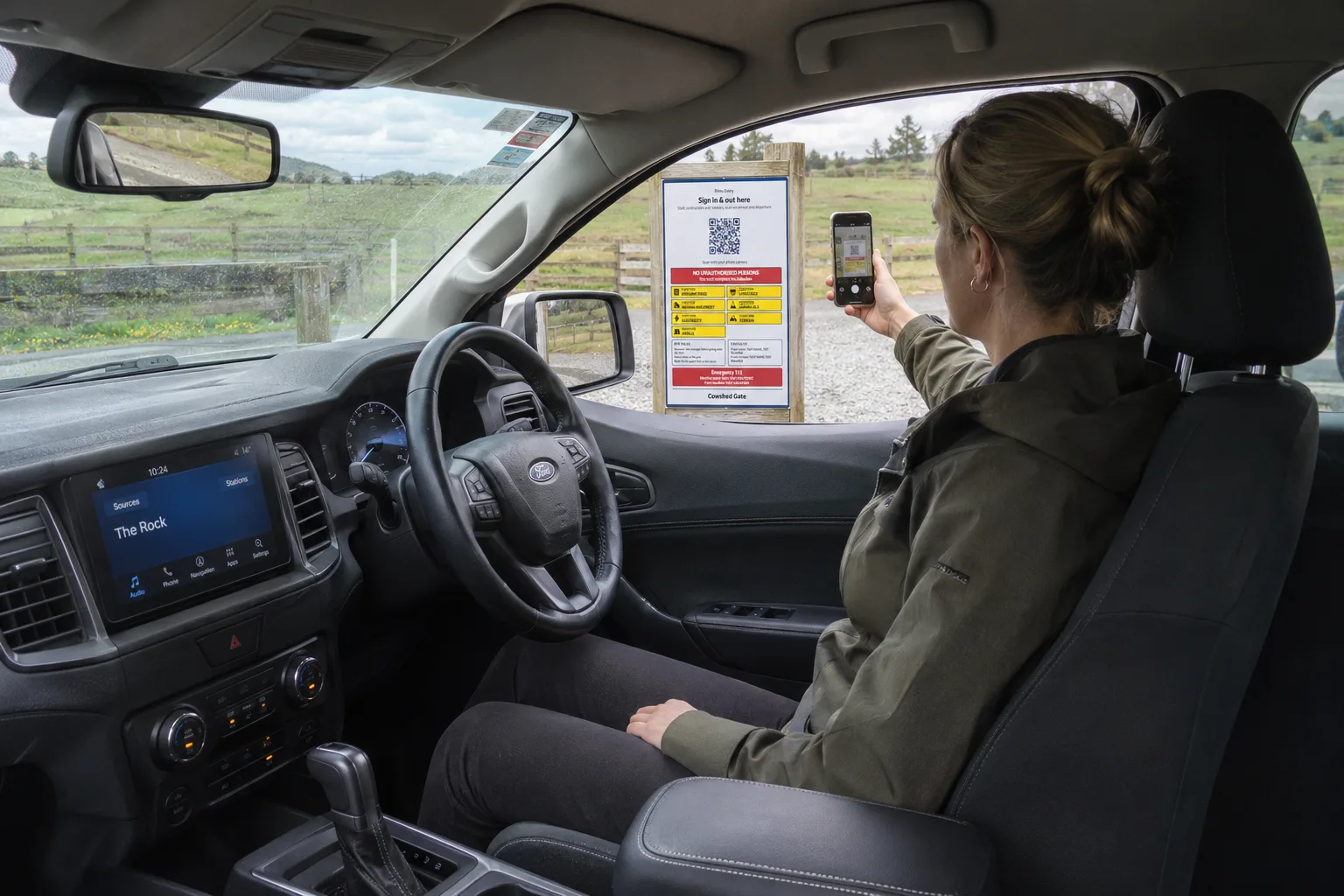
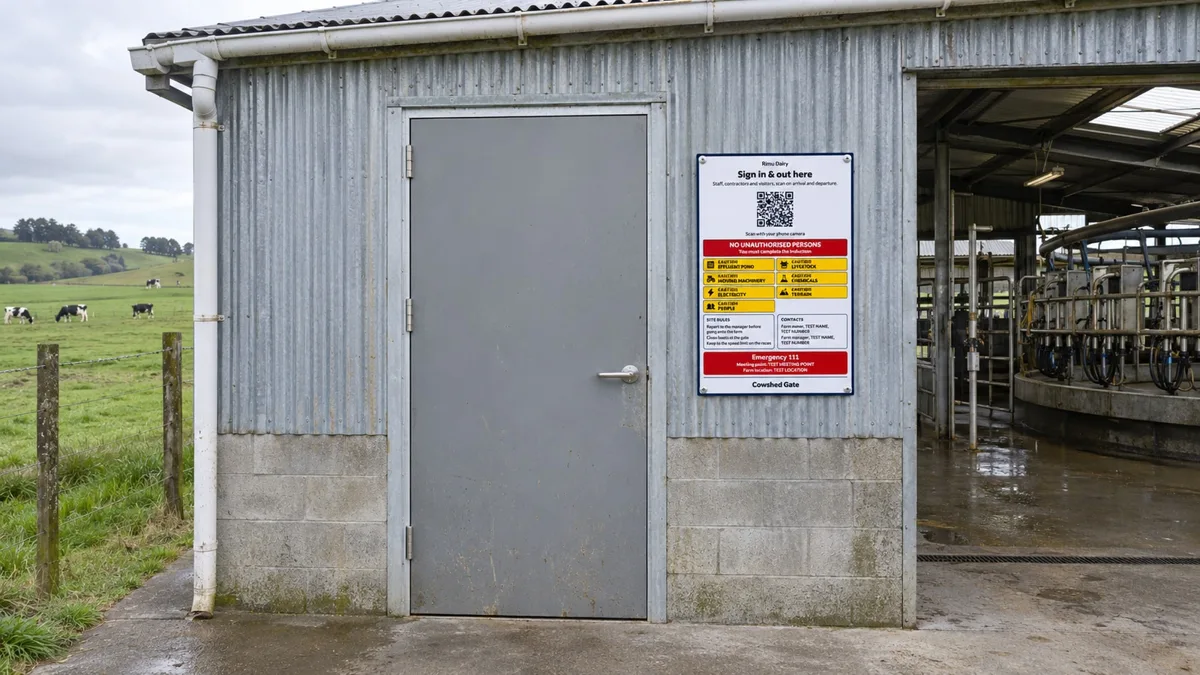
A sign at the entrance, a visitor sign in form and your rules for people coming on. DairyNZ's visitor plan says the sign in form records who has come and when they arrived, and that visitors sign out when they leave (DairyNZ).
Who does what
Name the person for each job and how often it is done, including what you have agreed with contractors and the people you buy stock from. DairyNZ suggests standard operating procedures so the farm team knows what is expected, and reviewing and updating the plan with your team (DairyNZ).
Who to ring if something turns up
The MPI exotic pest and disease hotline is 0800 80 99 66, and DairyNZ prints it on its template. Add your vet's number beside it. DairyNZ's template also has an emergency management section for what the farm does in a response.
A review date
OSPRI says a plan should be reviewed and updated regularly to account for new threats, changes on the farm or with the season, and lessons from incidents or monitoring (OSPRI).
For working through each part on your own farm, see How to write a biosecurity plan for your dairy farm.
Common questions
Is there a free dairy farm biosecurity plan template?
DairyNZ and Beef + Lamb New Zealand each publish a free Biosecurity Farm Plan template.
How often should I update the plan?
OSPRI says regularly, to account for new threats, changes on the farm or with the season, and lessons from incidents or monitoring.
What should a visitor sign in form record?
DairyNZ's visitor plan says it records who has come and when they arrived, and that visitors sign out when they leave.