Biosecurity on a farm means reducing the risk of diseases, weeds or pests entering, spreading or leaving your property. That is how the Biosecurity WOF checklist describes it (Biosecurity WOF).
Start with a template
MPI's advice is to write up your biosecurity plan, using one from your industry body or processor if they have one, or DairyNZ's biosecurity planner (MPI). DairyNZ publishes a free Biosecurity Farm Plan template. It works in three steps: look at your farm map, assess the risk pathways, and put a plan in place to manage the risks.
DairyNZ also suggests involving your vet or another biosecurity expert when you develop the plan (DairyNZ).
1. Write down your property
Record who owns and runs the farm, what it produces, and who wrote the plan.
2. Mark up your farm map
Put your entrances, parking and wash bay on a map of the farm. The Biosecurity WOF asks whether your farm has one main entry point, and whether you have a map with the biosecurity risk areas marked on it. Where you can, it suggests one main access with the other entry points closed off.
3. List what arrives and what leaves
Go through everything that comes onto the farm and goes off it: stock, feed, vehicles, gear and people. MPI advises keeping new stock away from your own stock until you are sure they are healthy, for at least one week and preferably two (MPI).
For cattle, MPI says Mycoplasma bovis spreads mainly through close and prolonged contact between cattle, and through calves drinking milk from infected cows (MPI). For feed, DairyNZ's template suggests hay and silage of good quality, harvested early before weed seeds become viable.
4. Work out how each one could bring something in
For each line on your list, write down how it could carry a pest, weed or disease onto the farm, or take one off.
5. Rate the risks and pick what to sort out first
Look at how often each one happens on your farm and what it would cost if something did come in that way. The ones that happen often and would cost the most are where you start.
6. Set a goal for each of those risks
Give each top risk a goal you can check: what will be done, when it starts, how often, and how you will know it happened.
7. Say who does what
Name who does each job, how often, and what they use. Include what you have agreed with people who do not work for you, such as contractors and the people you buy stock from. DairyNZ suggests standard operating procedures so the farm team knows what is expected, and reviewing and updating the plan with your team.
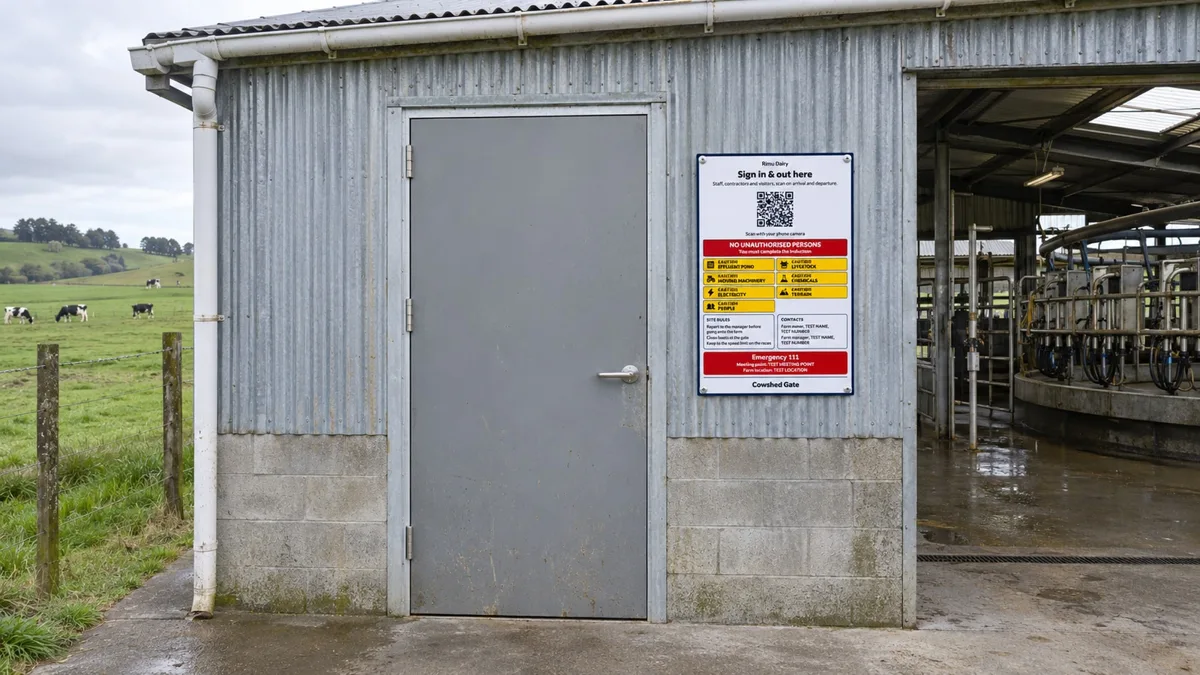
For people coming onto the farm, MPI's message is clean on, clean off: footwear, vehicles and work clothes clean before they arrive (MPI). DairyNZ suggests a sign at the farm entrance so visitors contact you before they come in (DairyNZ).
If something turns up
Unusual plants, insects or pests go to the MPI exotic pest and disease hotline on 0800 80 99 66. If your stock show unusual levels of mastitis, abortions, arthritis or pneumonia, DairyNZ's advice is to contact your vet immediately (DairyNZ). Put both in your plan, with your vet's number.
Keep it in use
Come back to the plan after it has been running for a few weeks. Write down what actually happened, including the days you checked and found nothing, and change whatever did not work. That revised plan is your version 2.
Common questions
Where can I get a free dairy farm biosecurity plan template?
DairyNZ publishes a free Biosecurity Farm Plan template, and Beef + Lamb New Zealand's Biosecurity WOF is a checklist for the same job.
Who should help me write it?
DairyNZ suggests involving your vet or another biosecurity expert, and reviewing the plan with your farm team.
What number do I ring if I find an unusual pest?
The MPI exotic pest and disease hotline, 0800 80 99 66.