What does a freight forwarder actually do?
Look at what you are wearing, the phone in your hand, the food in your fridge. Almost none of it was made where you bought it. Every item travelled, often halfway around the world, before it reached you. Someone organised that journey. That someone is a freight forwarder.
A freight forwarder coordinates the movement of goods from one place to another, whether that is across town or across the world. They know the routes, the costs, the rules, and the paperwork, and they put it all together into one smooth journey. For a full breakdown, see what a freight forwarder actually does. Here is the part that surprises most newcomers: a forwarder usually does not own the trucks, ships, or planes. They are the organiser and the expert, not the driver or the ship's captain.
The easiest way to picture it is a travel agent, but for cargo. A travel agent does not fly the plane or drive the bus. They know the options, book the best route, handle the documents, and sort out problems when they come up. A forwarder does exactly that, for goods instead of for people.
A freight forwarder is the expert organiser of moving goods. They book the transport, prepare the documents, clear customs, arrange insurance, and track the shipment, so the business sending the goods does not have to.
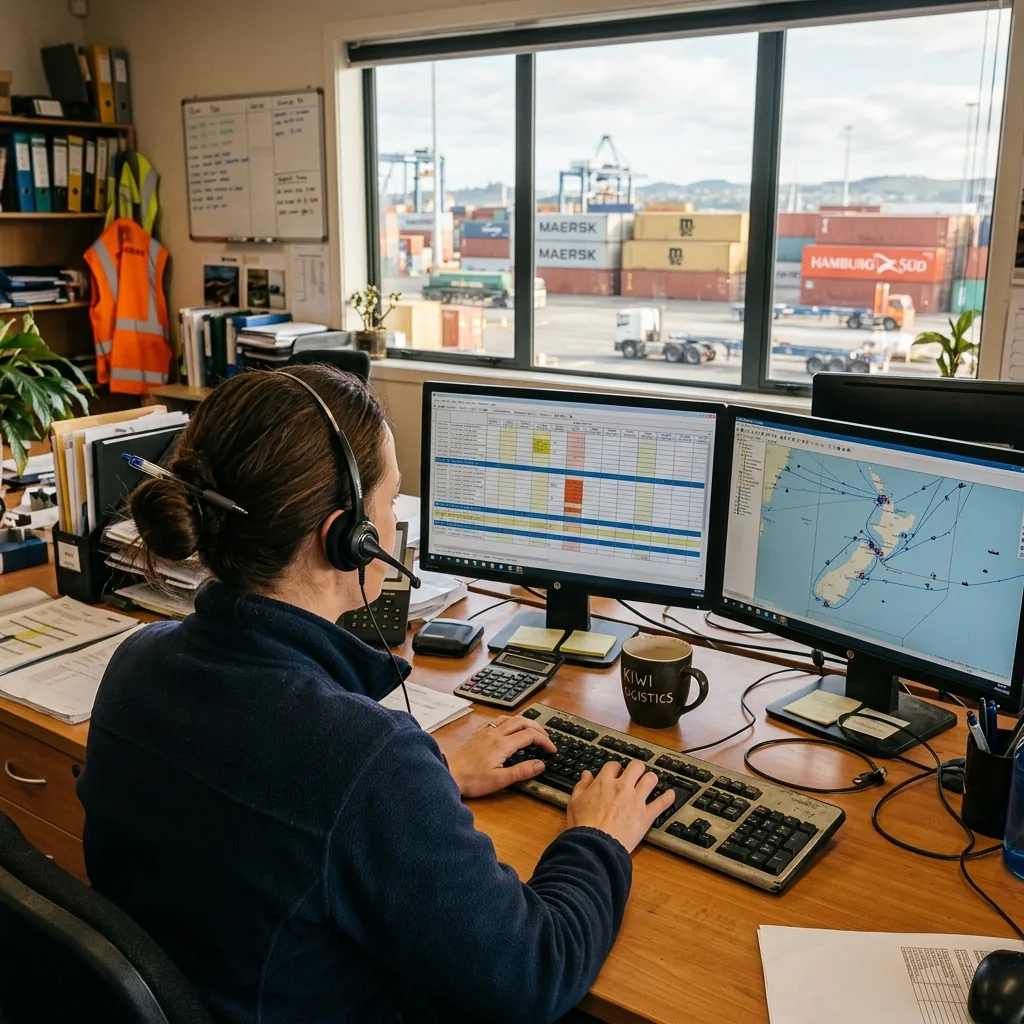
Why New Zealand needs freight forwarders
New Zealand sits a long way from its trading partners, and we import and export almost everything by sea and air. Food, machinery, building materials, clothing, vehicle parts, and the goods on every shop shelf arrive on a ship or a plane that someone had to book and clear. The people who organise that movement keep the whole country connected to the world.
That work happens every day of the year, in good times and bad. It is steady, and it needs young people coming through. As experienced staff retire, freight and logistics businesses across Auckland, Tauranga, Hamilton, Wellington, Christchurch, and the regional ports are looking for people willing to learn the trade.
No degree required, and you earn while you learn
You do not need a university degree to become a freight forwarder. A degree can help for some specialist or management roles later on, but it is not how most people get in. The common route is to start in an entry role and train on the job, or to take a few short courses that show an employer you are ready.
That means you can earn a wage from day one instead of paying for years of study. Plenty of people in freight forwarding, customs broking, and warehousing began straight out of school and worked their way up to senior roles.
The fastest way to stand out is to turn up to your first day already trained. A few short courses show an employer you are ready, and they cost far less than a year at university.
The realistic entry path, step by step
Most people follow a similar route into the industry. You do not need every step in place before you apply, but knowing the shape of it helps you plan.
- Start in an entry role. Many forwarders begin as a freight or operations assistant, a customs entry clerk, or a warehouse and logistics hand. These roles teach you how a shipment moves and what the paperwork means.
- Get your first job with proof you are ready. A short induction course in health and safety, manual handling, and forklift awareness tells an employer you can be useful on day one. Add these to your CV.
- Learn on the job. Freight forwarding is taught mostly by doing. You will sit alongside experienced staff, handle real bookings, and pick up the routes, carriers, and customs rules as you go.
- Add short courses and certificates. An introduction to freight forwarding, biosecurity awareness for handling imported containers, and communication training all make you more capable and more promotable.
- Progress into specialist or senior roles. With a year or two of experience you can move into customs broking, operations coordination, or team leadership, and the pay rises with you.
What you can earn: entry vs experienced
The pay ranges below are a guide and will vary by employer and region. They match the ranges used across the rest of this site so the numbers stay consistent.
| Stage | What you are doing | Typical pay |
|---|---|---|
| Entry level | Freight or operations assistant, learning how shipments move and how the paperwork works. | $50k to $58k |
| Experienced forwarder | Coordinating shipments from overseas all the way to the door, with little supervision. | $58k to $72k |
| Senior or specialist | Customs broking, operations management, or running a desk, where deep knowledge pays. | $72k to $95k+ |
For comparison, a freight forwarder role on this site is listed at $55k to $72k, an NZ customs broker at $58k to $95k, and an importer of record, who sources products overseas and brings them to Kiwi buyers, at $65k to $120k or more. You can see every role and what it pays in our guide to import pathway careers in New Zealand.
The skills employers actually want
Freight forwarding rewards people who are organised and reliable more than people with the highest marks. From the day-to-day work of the role, these are the skills that get you hired and promoted.
- Attention to detail. A missing certificate or a wrong figure on a customs entry can hold a whole container at the border. Catching small things early is the heart of the job.
- Clear communication. A forwarder keeps the client updated on timelines and handles delays. You will be on the phone and email all day with carriers, ports, and customers.
- Problem solving. Ships are late, containers get held, paperwork goes missing. Staying calm and finding the next best option is a daily skill.
- Following rules carefully. A forwarder works within customs, biosecurity, and health and safety rules. You do not need to be a lawyer, but you do need to know which rulebook applies and when to act.
- Teamwork. A shipment passes through many hands. People who pull their weight and help the team get noticed.
In New Zealand three rulebooks matter most: the Customs and Excise Act for importing and exporting, the Biosecurity Act administered by MPI to keep out pests and disease, and the Health and Safety at Work Act for handling goods safely. Knowing who does what, from NZ Customs to MPI, is part of the job. As you move into import and export work, the trade terms matter too: see the common Incoterms mistakes that cost New Zealand businesses money.
Where the jobs are
Freight and logistics work clusters around ports and freight hubs. The biggest concentration is in Auckland, near the country's largest port and airport, followed by Tauranga, home to New Zealand's busiest container port. Hamilton sits on the main freight corridor between them, and Wellington, Christchurch, and the South Island ports all have forwarders, customs brokers, and warehousing operators.
Jobs appear with freight forwarding companies, customs broking firms, shipping lines, third party logistics (3PL) providers, and the import and export arms of larger businesses. Many are advertised on the usual job boards, but a lot are filled by people who turned up trained and keen.
Related roles worth knowing
Freight forwarding sits next to several roles that share the same world. If forwarding is not quite the fit, one of these might be.
- Customs broker. Clears import entries accurately so trade keeps moving. Forwarders often act as agents lodging customs entries, so the two roles overlap closely. Listed on this site at $58k to $95k.
- Third party logistics (3PL) and warehouse operator. Runs the warehouse floor and unpacks imported containers. A common entry point, listed at $50k to $65k.
- Shipping line operations. Moves freight through New Zealand ports and keeps vessels turning around. Listed at $60k to $85k.
All of these connect through the same chain of people who bring goods into New Zealand and out to the people who use them. Our import pathway careers guide walks through every one.
Find the right career for you
Explore freight forwarding and every related role, and see the training that gets you started.
Start Your Career Browse CareersTraining that helps you start
A handful of short courses cover what most freight and logistics employers expect on day one. Capability Solutions offers several free courses you can do now at capabilitysolutions.co.nz.
Free courses to do now
- Biosecurity Awareness. Useful if you will open or unpack imported containers, where pests and untreated timber are a real risk.
- Working Safely with MPI. Helps you understand the border and biosecurity rules a forwarder works within.
- Forklift Awareness. A practical basic for any warehouse or freight site.
- Understanding Behaviours. Builds the communication and teamwork skills that get you noticed once you are in the door.
Coming soon: Introduction to Freight Forwarding
Capability Solutions is building a full Introduction to Freight Forwarding course that follows one real shipment from Hamilton to Berlin and teaches the role from the ground up. If you want to be first to know when it opens, register your interest by email.
Your next step
- Look at the roles. Use the Start Your Career page to see what freight forwarding and related jobs involve day to day.
- Do a free course. Start with Biosecurity Awareness or Forklift Awareness at capabilitysolutions.co.nz so you have proof you are ready.
- Apply with that proof. List your completed training on your CV and approach freight forwarders, customs brokers, and warehousing firms near your nearest port.
- Keep learning on the job. Once you are in, add an introduction to freight forwarding and specialist training as you find the part of the work you enjoy.
Common questions
What does a freight forwarder do?
A freight forwarder organises and coordinates the movement of goods from one place to another. They book the transport, prepare the shipping documents, arrange customs clearance, sort out insurance, and track the shipment. They usually do not own the ships, planes, or trucks themselves. The simplest way to picture it is a travel agent, but for cargo.
Do I need a degree to become a freight forwarder in New Zealand?
No. Most people start in an entry role and train on the job, so you can earn a wage from day one. A few short courses help you stand out. A degree can be useful for some specialist or management roles later on, but it is not required to get in.
How much does a freight forwarder earn in New Zealand?
Entry roles typically start around $50,000 to $58,000 a year. An experienced forwarder earns roughly $58,000 to $72,000, and senior or specialist roles such as customs broking can reach $95,000 or more. Pay varies by employer and region.
How do I get my first job in freight forwarding?
Start by doing a short induction course in health and safety, manual handling, and forklift awareness so you have proof you are ready. Then apply to freight forwarders, customs brokers, shipping lines, and warehousing firms near your nearest port. Many entry roles are filled by people who turned up trained and keen rather than people with the highest marks.
What skills do freight forwarding employers want?
Attention to detail, clear communication, problem solving, careful rule following, and teamwork. A small mistake on a customs entry can hold a whole container at the border, so catching things early matters more than top exam results.
Where are the freight forwarding jobs in New Zealand?
Most are near ports and freight hubs: Auckland, Tauranga, Hamilton, Wellington, Christchurch, and the regional ports. Roles sit with freight forwarding companies, customs broking firms, shipping lines, third party logistics providers, and the import and export teams of larger businesses.
What free training can I do to get started?
Capability Solutions offers free courses at capabilitysolutions.co.nz, including Biosecurity Awareness, Working Safely with MPI, Forklift Awareness, and Understanding Behaviours. Introduction to Freight Forwarding is also available, a paid seven-chapter course that takes you from the factory door to final delivery.
What is the difference between a freight forwarder and a customs broker?
A freight forwarder organises the whole journey of a shipment, from booking transport to tracking it to the door. A customs broker focuses on clearing import entries accurately so goods pass the border. The two roles overlap, and forwarders often act as agents lodging the customs entries themselves.