Most people hurt by forklifts never drive one
Ask any warehouse manager who they worry about around forklifts, and the honest answer is rarely the operator. It is the new starter cutting across the aisle. The packer reversing out of a bay. The visitor walking the floor without a high-vis vest. In New Zealand warehouses, distribution centres and loading docks, the people most likely to be seriously hurt by a forklift are the ones standing next to it, not sitting on it.
That is the uncomfortable truth behind forklift safety. A licensed operator can do everything right and still strike someone who did not understand how the machine moves, where its blind spots are, or why standing in the wrong place for two seconds is enough. Forklifts remain one of the most common sources of serious harm in warehousing and logistics, and awareness on foot is the part most teams overlook.
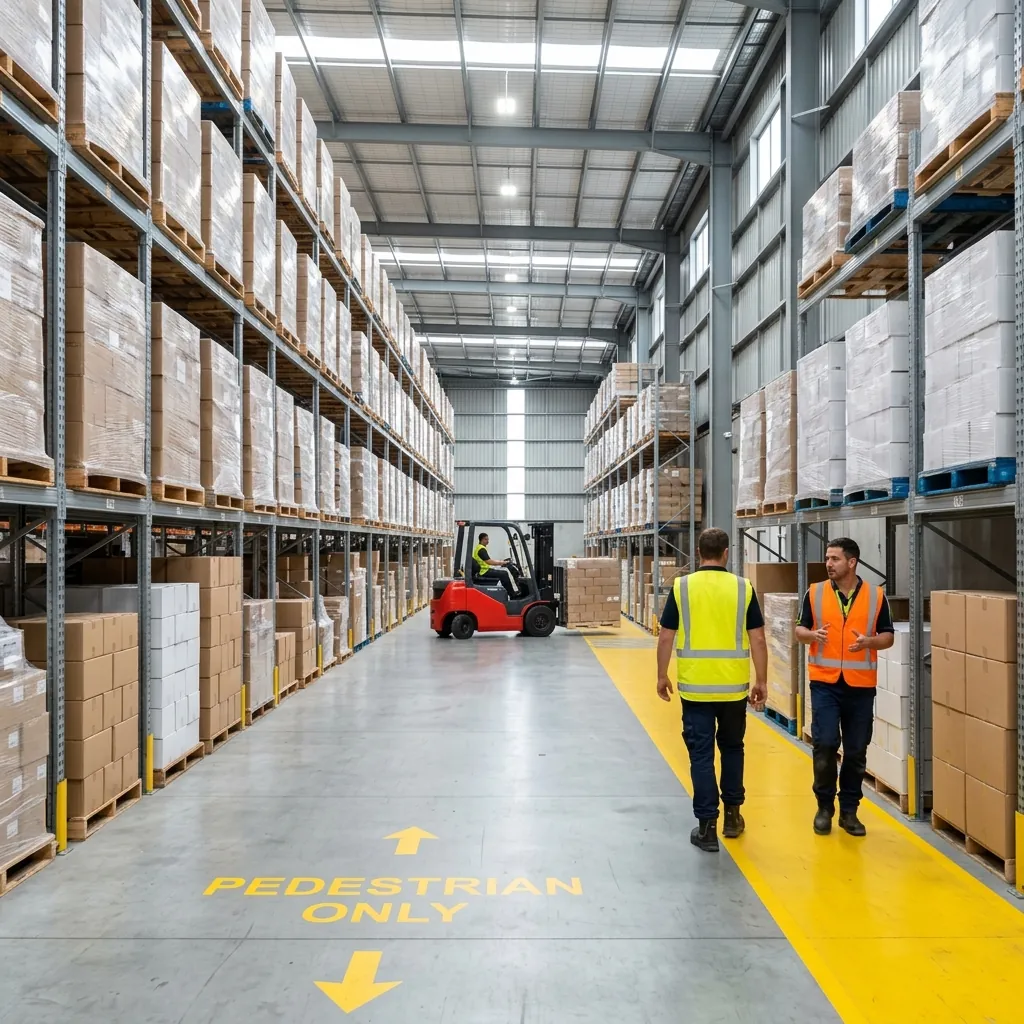
Operator certification keeps the driver competent. It does nothing for the dozen people on foot who share that same floor every shift. Those people need their own training, and it does not need to be operator-level detail.
Why a forklift is more dangerous than it looks
A forklift is not a small truck. It behaves in ways that catch people out, and most of those surprises are invisible until something goes wrong.
- It steers from the back. The rear end swings wide when a forklift turns, so the danger is often where a person least expects it.
- It is heavier than it looks. A counterbalance forklift can weigh more than two cars once it is loaded. It cannot stop or swerve like a car, and it does not need to hit fast to cause serious injury.
- The load blocks the view. When a forklift carries a tall or wide load, the operator may be reversing simply because they cannot see forward. A person who steps behind it is invisible.
- It can tip. Sharp turns, uneven floors and raised loads change the balance of the machine in an instant.
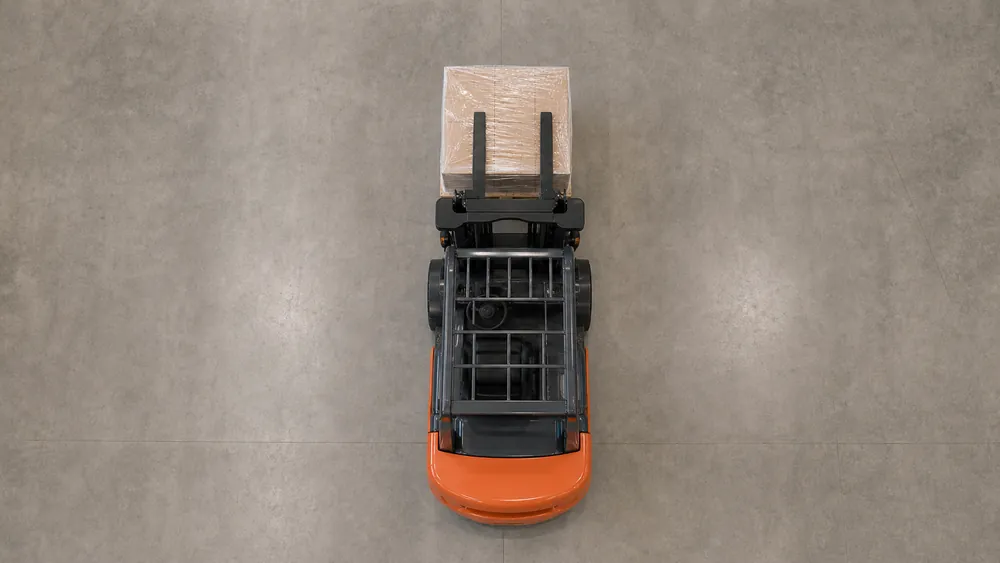
None of this is obvious to someone whose job is picking, packing or receiving. That gap between what the machine actually does and what people on foot assume it does is exactly where injuries happen.
The danger zones in a busy warehouse
Most serious near-misses cluster in a handful of predictable places. Once a team can name them, they start watching for them.
- Blind corners and aisle ends, where a forklift and a person on foot arrive at the same point with no warning.
- Loading docks and truck zones, where forklifts reverse, trucks move and floor traffic is heaviest.
- The swing path behind a turning forklift, the area people instinctively misjudge.
- Pedestrian crossing points that are not marked, or that everyone has quietly stopped using.
- Anywhere a load is raised, where something can fall or the machine can become unstable.
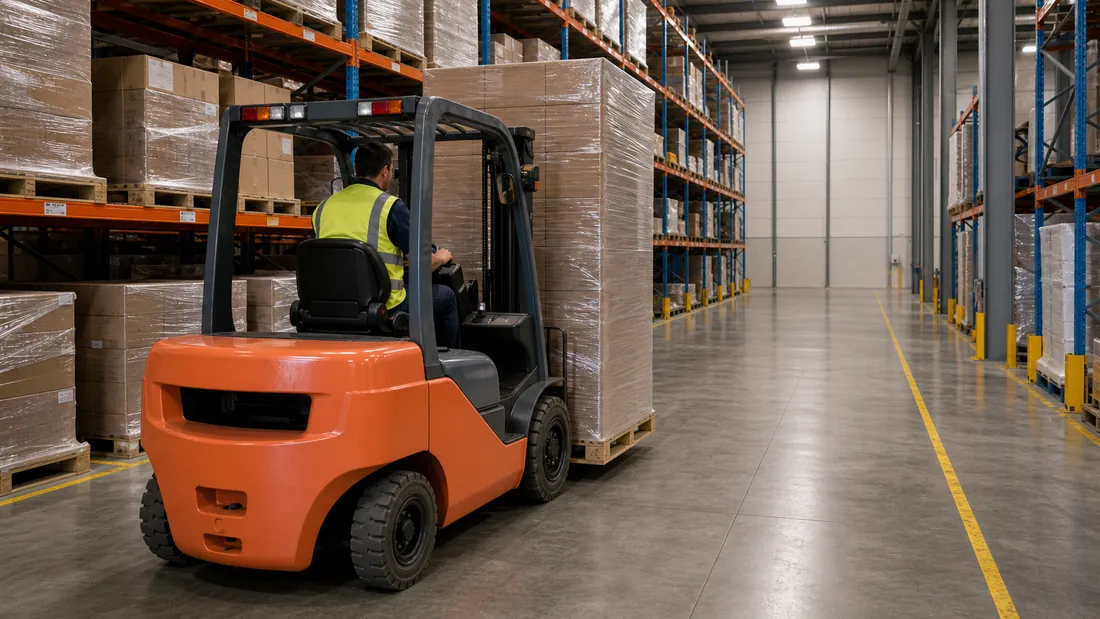
Separating people from forklifts is the strongest control there is: marked walkways, exclusion zones and clear right-of-way rules. But controls only work when everyone on the floor understands the reason behind them. That understanding is what awareness training delivers.
Forklift safety is everyone's job
Under the Health and Safety at Work Act 2015, keeping people safe around mobile plant is a shared duty. The business has to manage the risk, and every worker has to take reasonable care for their own safety and the safety of others. In practice that means the responsibility does not sit with the operator alone. It sits with the whole team that shares the floor.
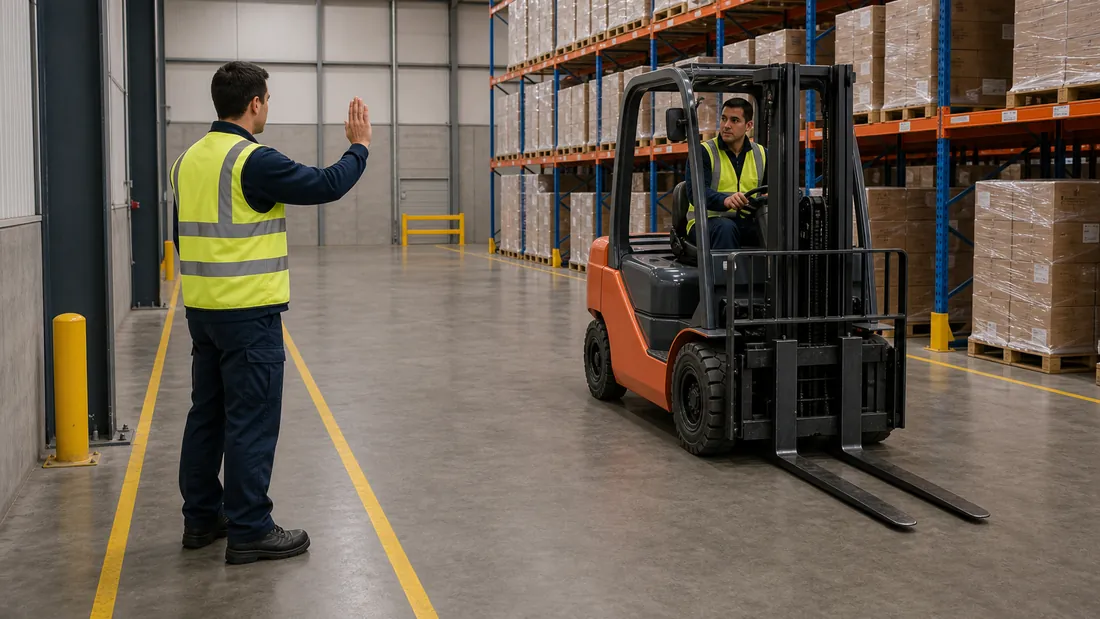
A pedestrian who knows to make eye contact with the operator, who never assumes they have been seen, and who keeps clear of the swing path is doing real safety work. They are also making the operator's job easier and the whole floor calmer. Awareness is not about turning everyone into a driver. It is about giving people the few habits that keep them out of harm's way.
What good awareness looks like on the floor
Effective forklift awareness training is short, practical and built around what a person on foot actually needs to know. The strongest courses cover the same ground:
- Why forklifts demand respect, and how they really move.
- Where the danger zones are, and how to read them.
- The simple habits for working safely around a forklift: stay visible, stay clear, never assume.
- How to spot trouble early and feel confident speaking up before it becomes an incident.
The goal is not a thick manual. It is a team that notices the right things and reacts the right way without having to think hard about it.
Get your team forklift-aware in about 30 minutes
Forklift Awareness for Warehouse Teams is a short, interactive New Zealand course for everyone who works near forklifts but does not drive one. Seven lessons, any device, no operator-level detail they do not need.
Enrol your team Browse free coursesWhere this matters most: warehouses, docks and transitional facilities
Forklifts turn up wherever goods are moved and stored: warehouses and distribution centres, packhouses, yards and loading docks. They are also a constant presence in the facilities that handle imported goods. Any site running as an MPI transitional facility is, by definition, a place where containers are unloaded and stock is shifted, which means forklifts and people on foot working in the same space.
If your site already takes biosecurity and transitional-facility health and safety seriously, forklift awareness is the natural companion piece. The same workers who need to understand which biosecurity training they need are the ones sharing the floor with mobile plant every day. Training them once, for both, builds a genuinely safer site.
How to train your whole team without the hassle
The practical barrier is rarely willingness. It is time. Pulling a team off the floor for a half-day session is expensive, and most pedestrian awareness does not need that depth. A short online course solves it: each worker completes it on any device, in about half an hour, during a quiet moment or as part of induction.
It also scales. A new starter can be trained on day one. A whole team can be enrolled at once. And for businesses running several sites or wanting their own branded training, everything can sit in one place alongside more than fifteen other courses.
Forklift safety is not just an operator problem. The people most likely to be seriously hurt are the ones on foot, and a thirty-minute awareness course gives your whole team the few habits that keep them safe. It is one of the cheapest pieces of training you can run, and one of the most likely to prevent a serious injury on your floor.